When parents are separating or already in conflict, the phrase child custody vs parental rights can cause real confusion. Many people use those terms as if they mean the same thing, but they do not. That distinction matters because a custody case decides how a child will be raised and where the child will spend time, while parental rights can refer to the broader legal relationship a parent has with that child.
If you are facing a family court case in New York, this is not just a wording issue. The difference affects decision-making, parenting time, school access, medical information, and in the most serious situations, whether a parent’s legal relationship with a child remains intact at all. I have seen how much stress this creates for parents who are already carrying enough. Clear answers help people make better decisions.
Child custody vs parental rights in plain English
Child custody usually refers to two core questions. First, who makes major decisions for the child? Second, where does the child live and when does each parent spend time with the child?
Parental rights are broader. They can include the right to seek custody or visitation, the right to receive information about a child’s education and health, the right to participate in major decisions, and the right to maintain a legal parent-child relationship. A parent can have parental rights even if that parent does not have primary custody. That is one reason these concepts should not be collapsed into one.
In New York, custody is often divided into legal custody and physical custody. Legal custody addresses major decisions involving education, medical care, religion, and other important aspects of a child’s life. Physical custody addresses where the child resides on a day-to-day basis. Parents may share one or both, or one parent may have primary responsibility depending on the facts.
Parental rights, by contrast, do not disappear simply because one parent has primary physical custody. A noncustodial parent may still have scheduled parenting time, access to records, input on serious issues, and the right to ask the court for changes if circumstances shift.
What courts actually decide in a custody case
When a case is before the court, the judge is not deciding which parent loves the child more. The court is deciding what arrangement serves the child’s best interests. That standard controls custody decisions in New York.
Best interests is a broad legal standard, and that means every case turns on its own facts. Courts may look at each parent’s ability to provide stability, the history of caregiving, the child’s routine, communication between the parents, work schedules, the child’s educational needs, and whether there is any history of domestic violence, neglect, substance abuse, or interference with the child’s relationship with the other parent.
This is where parents sometimes get tripped up. They believe they have “rights” that automatically guarantee a certain outcome. In reality, while parents do have important legal rights, custody is not awarded based on slogans or assumptions. It is decided based on evidence and the child’s welfare.
That can be frustrating, especially if you believe the other parent is being unreasonable. But it also means the court has room to respond to real-life complexity. A parent may have meaningful parental rights while still being subject to limits if the child’s safety or stability is at risk.
When parental rights become the central issue
Most family court disputes involve custody and parenting time, not the complete loss of parental rights. But there are serious cases where parental rights themselves become the focus.
For example, termination of parental rights is a far more extreme legal action than awarding sole custody to one parent. If parental rights are terminated, the legal relationship between parent and child can be severed. That can affect inheritance, decision-making, visitation, and future legal standing. This usually happens in abuse, neglect, abandonment, or adoption-related proceedings, not in ordinary divorce or separation disputes.
That distinction matters. A parent who loses custody has not necessarily lost parental rights. The parent may still have visitation, the ability to seek modification later, and the right to remain involved in the child’s life. A parent whose rights are terminated is in a very different position.
So when people ask about child custody vs parental rights, part of the answer is this: custody is about the arrangement of care and authority, while parental rights define the underlying legal bond and entitlements that exist because of the parent-child relationship.
Common misunderstandings parents bring into court
One of the most common misunderstandings is the belief that mothers automatically get custody. New York courts do not start with that presumption. Fathers and mothers stand on equal legal footing. What matters is the child’s best interests.
Another misunderstanding is that paying child support buys parenting rights or, on the flip side, missing support payments automatically ends visitation. These issues are related because they involve the same family, but they are legally separate. A parent generally cannot be denied court-ordered parenting time just because support is in arrears, and a parent cannot refuse to pay support because parenting time is being frustrated.
Parents also sometimes assume that if they were never married, one parent has no enforceable rights. That is not always true. Paternity may need to be established first, but once legal parentage is recognized, custody and parental rights can be addressed through the court.
For a broader look at divorce and family law issues in New York, some readers also review https://divorce.usattorneys.com/new-york.
Child custody vs parental rights after separation or divorce
After separation, one parent may be designated the custodial parent for primary residence purposes, but that does not end the other parent’s role. In many families, one parent has primary physical custody while both parents share legal custody. That means the child lives primarily with one parent, but major decisions are still made jointly.
In other cases, sole legal custody may be appropriate because the parents cannot communicate safely or effectively, or because there has been abuse, coercive control, or chronic instability. Shared legal custody sounds fair in theory, but in practice it only works when parents can cooperate at a basic level. If they cannot, the child often ends up stuck in the middle.
That is why there is no one-size-fits-all answer. A parenting arrangement that works for one family may be unworkable for another. The court is trying to build a structure the child can live inside, not reward one parent and punish the other.
How these issues affect everyday life
The legal distinction between custody and parental rights shows up in ordinary moments. Who can consent to medical treatment? Who speaks with the school about special education services? Who decides whether a child changes therapists, transfers schools, or travels out of state? Who gets access to school records or hospital information?
If an order is vague, conflict tends to follow. That is why careful drafting matters. Parents often focus only on overnights and weekends, but many future disputes come from unanswered questions about communication, pick-ups, holidays, travel, extracurricular activities, and emergency decisions.
In high-conflict cases, precision protects everyone. It protects the child from repeated disruption, and it protects each parent from constant arguments about what the order supposedly means.
Why legal advice matters when the words sound similar
People often wait too long to get advice because they think the issue is simple. They assume custody is custody, rights are rights, and the court will sort it out. But once allegations are made, temporary orders are entered, or routines become established, the case can take on a shape that is hard to change.
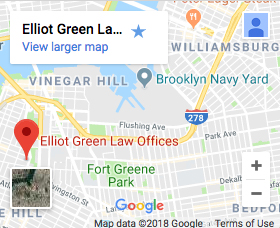
If you are in Brooklyn or elsewhere in New York and you are dealing with a custody dispute, a paternity issue, or a case involving abuse or neglect allegations, the legal language matters because the outcome affects daily life with your child. Elliot Green Law Offices approaches these cases with both urgency and care because parents need more than abstract legal definitions. They need practical protection and a strategy grounded in how family court really works.
A strong custody case is rarely built on outrage alone. It is built on facts, credibility, documentation, and a clear understanding of what the court is actually being asked to decide. Sometimes that means pushing hard for sole decision-making authority. Sometimes it means protecting a parent’s continued access and involvement. Sometimes it means recognizing that the case is really about parental rights at the most fundamental level.
If you are overwhelmed, that does not mean you are unprepared. It means this is personal. The right next step is to get clear about what is actually at stake, because once you understand the difference between custody and parental rights, you are in a much better position to protect your child and yourself.